Reflections

Reflecting on life, living and other things

Day by Day, and with Each Passing Moment

Day by Day, and with Each Passing Moment

Day by Day, and with Each Passing Moment

There’s a Hymn on My Radar. . .

The turn of the year provides an excellent opportunity to reflect on how we use the time–the minutes, hours, and days that God gives us–and it brought to mind the words of the hymn by Carolina Sandell (key details are below).

  • Day by day, and with each passing moment
  • Translator: A. L. Skoog;
  • Author: Carolina Sandell (1865) (also known as Lina, and sometimes spoken of as the Fanny Crosby of Sweden)
  • Tune: BLOTT EN DAG | Oscar Ahnfeldt

Enjoy listening to the melody here:

The words are:

1 Day by day and with each passing moment,
Strength I find to meet my trials here;
Trusting in my Father’s wise bestowment,
I’ve no cause for worry or for fear.
He whose heart is kind beyond all measure
Gives unto each day what he deems best–
Lovingly, its part of pain and pleasure,
Mingling toil with peace and rest.

2 Ev’ry day the Lord himself is near me,
With a special mercy for each hour;
All my cares he gladly bears and cheers me,
He whose name is Counselor and Pow’r.
The protection of his child and treasure
Is a charge that on himself he laid:
“As your days, your strength shall be in measure”–
This the pledge to me he made.

3 Help me then in ev’ry tribulation
So to trust your promises, O Lord,
That I lose not faith’s sweet consolation
Offered me within your holy Word.
Help me, Lord, when, toil and trouble meeting,
E’er to take, as from a father’s hand,
One by one, the days, the moments fleeting,
Till I reach the promised land.

For my musically minded readers, you could view the score HERE (thanks to Hymnary.org). And I see that hymnary.org also offers a dynamic / interactive way of viewing the hymn music as it is played HERE. However, be prepared that this seems a much speeded up version!


Further Insights

Hymnary.org (HERE) offers further interesting insights:

Translator: A. L. Skoog

Skoog, Andrew L. (Gunnarskog, Sweden, December 17, 1856 [sic]–October 30, 1934, Minneapolis, Minnesota). Evangelical Covenant. Son of pietists. Tailor’s apprentice at 10. Family emigrated to St. Paul, Minn., when Andrew was 13. Only formal music training was 12 lessons on a melodeon. Organist, choir director, and Sunday School superintendent in Swedish Tabernacle, Minneapolis, 1886-1916. Co-editor of hymnals: Evangelii Basun I & II, 1881-1883; Lilla Basunen, 1890; and Jubelklangen, 1896. Was in editorial committee of Covenant’s first three hymnals: Sions Basun, 1908; De Ungas Sångbok, 1914; and Mission Hymns, 1921. Editor and publisher of Gittit 1892-1908, a monthly choir journal with music; a series of ten bound volumes of choir selectio… Go to person page >

Author: Carolina Sandell

Caroline W. Sandell Berg (b. Froderyd, Sweden, 1832; d. Stockholm, Sweden, 1903), is better known as Lina Sandell, the “Fanny Crosby of Sweden.” “Lina” Wilhelmina Sandell Berg was the daughter of a Lutheran pastor to whom she was very close; she wrote hymns partly to cope with the fact that she witnessed his tragic death by drowning. Many of her 650 hymns were used in the revival services of Carl O. Rosenius, and a number of them gained popularity particularly because of the musical settings written by gospel singer Oskar Ahnfelt. Jenny Lind, the famous Swedish soprano, underwrote the cost of publishing a collection of Ahnfelt’s music, Andeliga Sänger (1850), which consisted mainly of Berg’s hymn texts.


Posted by Jim Holmes in Current Issues, Hymns, Reflections, Spirituality, Technology, 1 comment
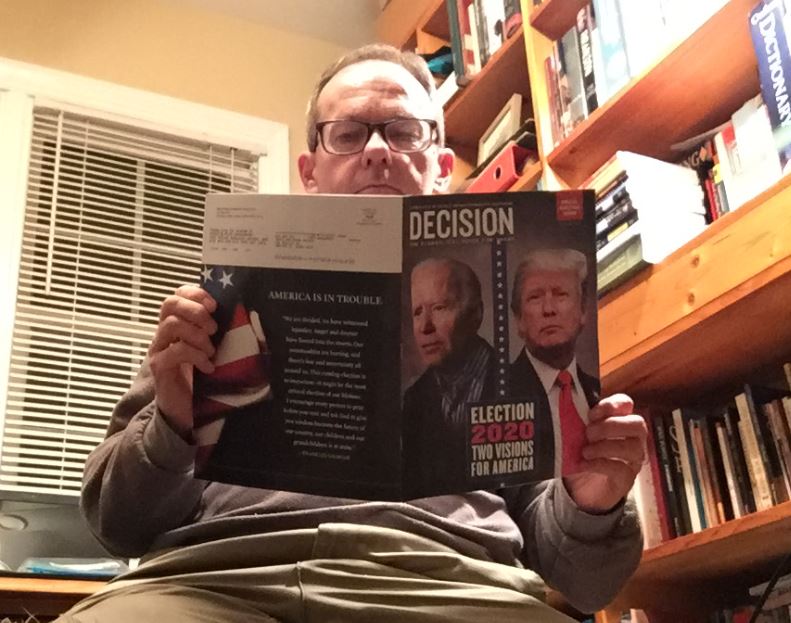
Election 2020: Two Visions for America (Decision Magazine)

Election 2020: Two Visions for America (Decision Magazine)

Election 2020: Two Visions for America (Decision Magazine)

Franklin Graham is indefatigable in his labors to further the Christian faith and the Judeo-Christian worldview that has been the foundation and cement of so much of the American nation.

When it comes to casting your vote, what are the issues involved?

It is axiomatic that a person should vote not so much for the personality of the candidate as for policy that the candidate will apply once in office. The runup to the 2020 elections has been characterized by media hysteria, and often, in such situations, the real issues remain unaddressed as the cameras and the news anchors concentrate on the personalities of the presidential and vice-presidential candidates rather than on their worldviews and values, thus leading to the policies they espouse.

I am not an American citizen, so I do not have the right to vote in the 2020 election. However, I do see the issues, and I appreciate the clarity with which Franklin Graham presents them. Consider the following notes from the October 2020 Decision Magazine online. The full text may be found HERE.

By way of quick snapshot, notice that the policy differences are, in most cases, diametrically opposite. Phrased this way, I might ask you questions such as:

  • Do you believe in the sanctity of life or in the slaughter of preborn infants?
  • Do you believe in the right and responsibility, under God, of following your own conscience?
  • Do you consider that a judiciary should act in keeping with the values of the nation’s founding fathers?
  • Do you believe in the biblical work ethic, and the proportionality of reward in keeping with initiative and industriousness?
  • Abraham Lincoln well said this:

    Elections belong to the people. It’s their decision. If they decide to turn their back on the fire and burn their behinds, then they will just have to sit on their blisters.

    The issues at stake in the November 2020 election are much more that a few blisters on our behinds.


    Where the Parties Stand

    “I think it’s the duty of every individual Christian at election time to study the issues, study the candidates, then go to the polls and vote.”
    —Billy Graham, 1952
    Every four years, as delegates from both major American political parties gather to officially nominate a presidential candidate and running mate, the party platforms are finalized and adopted, and policy positions are set for at least the next four years.

    In August, with the coronavirus altering how the conventions conducted their business, the Republican Party met in Charlotte, North Carolina, streamlining its official proceedings and relying on its 2016 platform to stake out a consensus of who it is and what it believes. The Democratic Party, meeting in Milwaukee, chose to adopt a new party platform. What follows is a comparison—drawn from those platforms, the Democratic and Republican party websites, and public statements—on where the two major parties stand on key issues for evangelical voters.


    Abortion on Demand & Federal Funding

    Democrats say they will “restore funding for Planned Parenthood” and will oppose and “fight to overturn federal and state laws that create barriers to women’s reproductive health and rights. We will repeal the Hyde Amendment, and protect and codify Roe v. Wade.” Congressional Democrats have repeatedly defeated “born-alive” protection bills and supported increased funding for abortion domestically and internationally.

    In keeping with the belief that “the family is the bedrock of our nation,” the GOP platform affirms, “The unborn child has a fundamental right to life which cannot be infringed.” The GOP supports a Human Life Amendment and state laws requiring informed consent, parental consent, waiting periods and clinic regulation. The GOP has broadly supported President Trump’s ending of funds for international abortions and partial defunding of Planned Parenthood.


    Religious Liberty & Conscience Rights

    Although the party states: “Democrats celebrate America’s history of religious pluralism and tolerance,” the platform says they will “reject the Trump administration’s use of broad exemptions to allow businesses, medical providers, social service agencies and others to discriminate,” meaning policies would aim to give preference to LGBTQ rights in cases in which religious exercise and rights of conscience conflict with liberalized interpretations of sexuality.

    Republicans affirm that religious freedom in the Bill of Rights protects the right of the people to practice their faith in their everyday lives. The platform endorses the First Amendment Defense Act, which would protect faith-based institutions and individuals from government discrimination. Additionally, the Trump administration has instructed federal agencies to accommodate rights of conscience for government employees, reversing Obama-era policies.


    Human Rights & Global Religious Freedom

    Democrats laud religious freedom as a “fundamental human right,” but will never “use it as a cover for discrimination.” The platform vows support for Iraq’s Christians and Yazidis, China’s persecuted Uyghurs and other religious minorities. Also: “We will restore the United States’ position of leadership on LGBTQ+ issues” in diplomacy and foreign policy, advancing the GLOBE Act and making LGBTQ issues a priority at the State Department, USAID and the National Security Council.

    The GOP favors integrating human rights issues into every level of diplomatic relations. Beginning in 2018, the U.S. has hosted an annual Ministerial to Advance Religious Freedom, drawing an international coalition to defend and promote global religious freedom. “Religious freedom for all people worldwide is a foreign policy priority of the United States, and the United States will respect and vigorously promote this freedom,” President Trump wrote on June 2.


    Federal Judges

    The Democratic platform says: “Our courts should reflect our country. Democrats will appoint people to the bench who are committed to seeing justice be served, and treating each case on its merits. We will nominate and confirm federal judges who have diverse backgrounds and experiences, including as public defenders, legal aid attorneys and civil rights lawyers.” Candidate Biden has vowed to seek judges who “respect” the Roe v. Wade abortion ruling.

    The GOP platform states: “A critical threat to our country’s constitutional order is an activist judiciary that usurps powers properly reserved to the people through other branches of government.” The party supports the appointment of justices and judges who respect the constitutional limits on their power and respect the authority of the states. President Trump has promised to continue working to appoint conservative federal judges.


    Economic Empowerment & Poverty

    The platform says: “Americans deserve an economy that works for everyone … it is a moral and an economic imperative that we support working families by rebuilding the American middle class.” The party supports raising the minimum wage to $15/hr., helping make home ownership more attainable, eradicating homelessness, “ending poverty and enabling all Americans to live up to their God-given potential.”

    The GOP supports eradicating welfare dependence by proposing “the dynamic compassion of work requirements in a growing economy, where opportunity takes the place of a handout, where true self-esteem can grow from the satisfaction of a job well done.” The Trump administration included Opportunity Zones in the 2017 tax reform law to spur economic opportunity in poor areas.


    National Defense

    The platform says the U.S. military “must be the most effective fighting force in the world.” To keep it that way, Democrats “will bring forever wars to a responsible end,” rationalize the defense budget, invest in future technologies, repair civil-military relations, and strengthen the covenant with service members, veterans and military families. They vow to reverse the Trump administration’s transgender ban and rebuild trust in the VA while improving mental health outcomes for veterans.

    The Republican platform favors building and maintaining a strong military as the path to peace and security. The party’s Principles for American Renewal says: “Keeping America safe and strong requires a strong military, growing the economy, energy independence and secure borders.” The party platform seeks to restore the nation’s military might and to rebuild troop numbers. Military pay has risen more than 2% each year since 2017, after six years of raises below 2%.


    The ‘Equality Act’ & Sexual Orientation Gender Identity (SOGI) Laws

    Candidate Biden has vowed to fast-track the Equality Act, which would federalize sexual orientation and gender identity in laws across the nation with detrimental outcomes for public education, domestic religious liberty and many other arenas. The Democratic Party has not taken a position on SOGI laws per se, but the party platform and party position statements, as well as legislative actions, have strongly supported “LGBTQ+” rights when they have conflicted with the religious beliefs of faith groups.

    President Trump has continued to signal opposition to the Equality Act—a bill that would create legal chaos as sexual rights collide with the religious beliefs and practices of millions of Americans. The GOP platform doesn’t mention SOGI laws, but it includes strong statements in support of “traditional marriage and family” as “the foundation for a free society, and has for millennia been entrusted with rearing children and instilling cultural values.” It laments the Supreme Court ruling legalizing national gay marriage.


    Israel & Jerusalem

    “Democrats believe a strong, secure, and democratic Israel is vital to the interests of the United States. Our commitment to Israel’s security, … its right to defend itself, and the 2016 Memorandum of Understanding is ironclad.” Democrats support Jerusalem as the capital and oppose efforts to “unfairly single out or delegitimize Israel.” They oppose settlement expansion and any steps that “undermine prospects for two states.”

    Republicans express “unequivocal support for Israel,” pointing out that it is the only Middle Eastern country with freedom of speech and freedom of religion. The GOP recognizes “Jerusalem as the eternal and indivisible capital of the Jewish state.” The party opposes the U.N.’s treatment of Israel as a “pariah state.” In 2018, President Trump moved the U.S. Embassy from Tel Aviv to Jerusalem, fulfilling a campaign promise.


    To read further, be sure to activate the link HERE.


Posted by Jim Holmes in Current Issues, Gospel, Guest Post, Reflections, Spirituality, Worldview, 0 comments
Where Shepherds Meet

Where Shepherds Meet

Where Shepherds Meet

It’s been several years since it was last opportune for me to attend the Shepherds’ Conference, an annual event held at the Grace Community Church (pastor-teacher, John MacArthur) just outside of Los Angeles, but it happened again this year. A book that guided through the editing and production process for Shepherd Press, Seven Key Principles for Effective Ministry (subtitled Nurturing Thriving Churches in a Postmodern Culture) was selected for promotion and giveaway, and so the publisher was invited to attend and also make available other resources on offer.

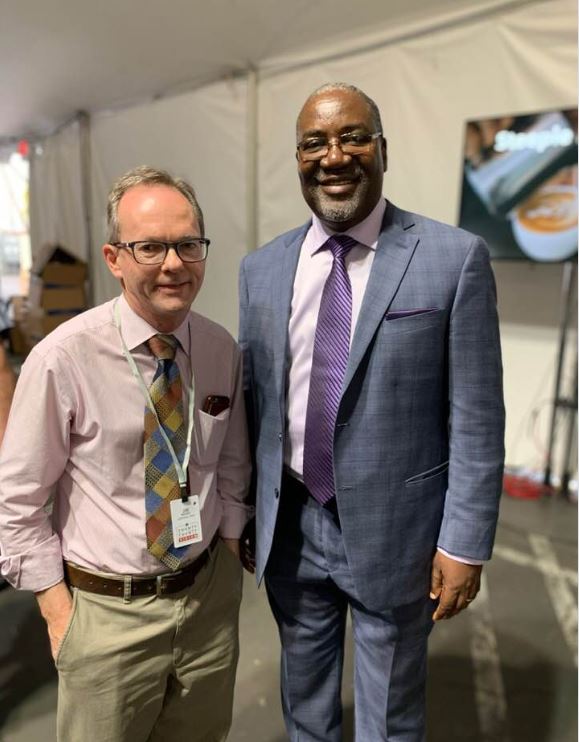
At the last minute, my good friend Anthony Russo, also from Greenville SC, was able to attend, so we had a blast as we traveled, encouraged each other along the way, engaged with others, shared the gospel, and enjoyed the fine hospitality of the members and friends of Grace Community Church.

Being the year 2020, it seemed fitting that the conference theme picked up on the idea of having perfect (2020) vision–in a nutshell: Doctrinal Clarity for a Confused Generation. The mission statement provides a succinct generic introduction to the event:

The mission of the Shepherds’ Conference is to provide the opportunity for men in church leadership to be challenged in their commitment to biblical ministry and to find encouragement as together we seek to become more effective servants of our chief Shepherd.

Anthony and I enjoyed meeting with hundreds of men who minister not only in North America, but around the world. Enjoy viewing the dozen or so pictures below!

Posted by Jim Holmes in Friendship, Memories, Networking, Publishing Books Today, Reflections, Spirituality, Windows on My Work, 0 comments
Rudolph W. Giuliani on Leadership

Rudolph W. Giuliani on Leadership

Rudolph W. Giuliani on Leadership

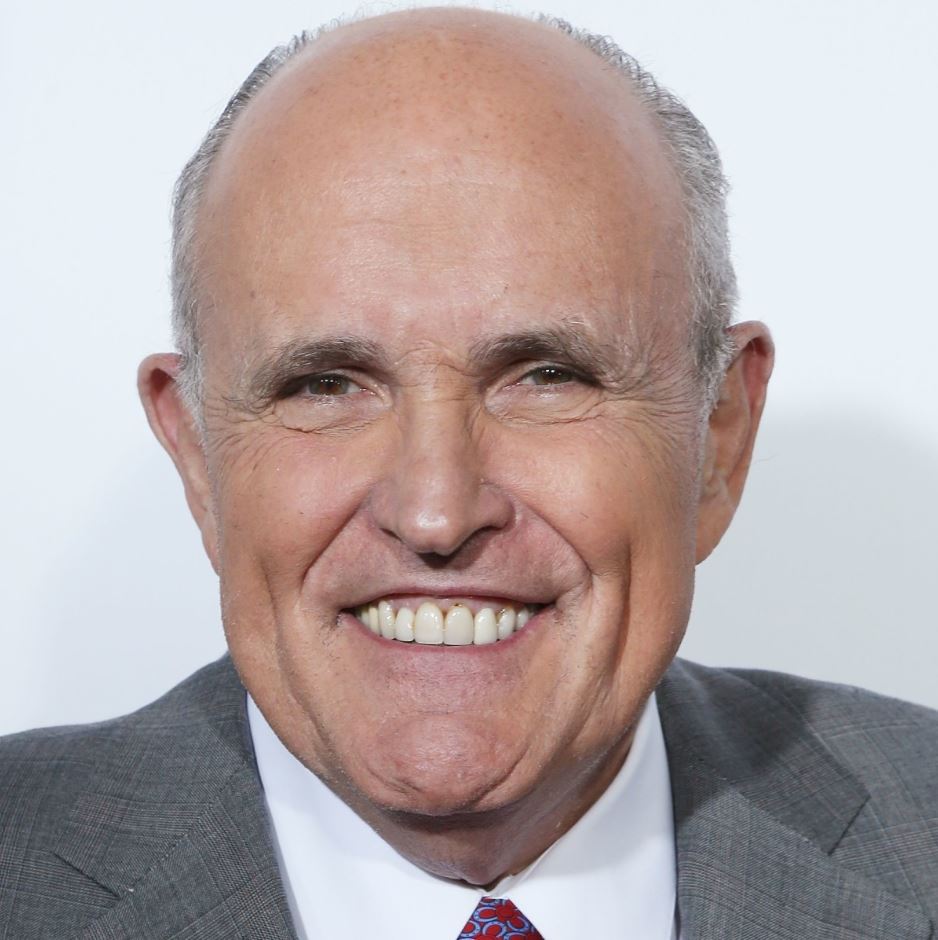
He faced the camera, his poise one of confidence, giving me, a viewer, a sense that he was in charge of the post-9/11 cleanup operation—and what an operation that was. That was my first impression of Mayor Rudy Giuliani of New York City as I watched my TV in Darlington, England. Subsequent views of the same man confirmed my impression that here was a man of competence, a leader, someone inspiring confidence in the stark face of deep trauma, a trauma that was felt by not only New Yorkers, but by people all round the world.

Fast forward nearly two decades: When I saw a secondhand book by Rudolph W. Giuliani in a thrift store in Greenville, I was tempted to buy it, but thought of the many other books at home clamoring for my attention. But I yielded and went back a week later and purchased a copy: Leadership

Written in three parts, the table of contents asserts several propositions about leadership, as below, which the author then engagingly develops in just under 400 pages.

1 September 11, 2001

2 First Things First

3 Prepare Relentlessly

4 Everyone’s Accountable, All of the Time

5 Surround Yourself with Great People

6 Reflect, Then Decide

7 Underpromise and Overdeliver

8 Develop and Communicate Strong Belief

9 Be Your Own Man

10 Loyalty: The Vital Virtue

11 Weddings Discretionary, Funerals Mandatory

12 Stand up to Bullies

13 Study. Read. Learn Independently

14 Organize Around a Purpose

15 Bribe Only Those Who Will Stay Bribed

16 Recovery

Giuliani’s childhood was shaped by strong Roman Catholic values, a love for history, an optimistic sense of what it is possible to achieve in this world, and, at times, being egged on to a good display of streetwise behaviors that helped him in his adult years to face down bullies and crooks.

The author’s can-do spirit breathes optimism through the book. At times, I found myself disagreeing with some of his faith values—I am protestant to the core—but I found myself loving his sincerity and zeal for faith as he knows it, and especially his commitment to a Judeo-Christian worldview and its outworking in the form of faith, family, and a good, solid work ethic—typical of a classical conservative. His treatment of the so-called squeegee men in NY is classic—Charge them for jaywalking, was his take on it. Nobody had thought of that!

At times a little self-congratulatory, Giuliani nevertheless charms the reader with his love for life, his love for doing the right thing, and for being a fighter to this end. And there is much in this book for ordinary people who are striving for excellence even within their own relatively minor circles. There is a feast in the chapter titles alone. I read this book over the course of a few months in bite sizes at occasional times of the month—in waiting rooms, waiting for a kettle to boil, and at other spare moments. The takeaways, for me, are largely in the propositions in the table of contents. There are many action points to be derived from these. I’ve seen too much blithering leadership in my circles—whether church, publishing, or charity work—over the years. Would that many leaders and prospective leaders would take on board some of Giuliani’s ideas and principles!

Featured image from www.biography.com/.image/t_share/MTQyODE5Nzc1NDczNTI2NTU2/rudy-giuliani-gettyimages-470786844_1600jpg.jpg
Posted by Jim Holmes in Current Issues, Reflections, Worldview, 0 comments
“My Name Shall Be Great Among the Nations”

“My Name Shall Be Great Among the Nations”

“My Name Shall Be Great Among the Nations”

The quote is from Malachi 1:11, a declaration by the LORD (Jehovah) of Hosts–the God of the armies of heaven and earth. It’s a declaration of certainty and fact, not a wish or a whimper. It’s as certain as certain can be!

When I was approached late last year by a representative of The Master’s Academy International with a view to helping produce a book of daily readings, I was immediately excited and energized by the prospect. The ministry has numerous staff and graduates in far-flung parts of the world, and each with a conviction and burden to make Christ’s name great in the location in which he serves.

Enjoy reading and reflecting on the reading for January 10 from a brother serving in South Africa


January 10

Kind in Heart, Humble in Spirit

To sum up, all of you be harmonious, sympathetic, brotherly, kindhearted, and humble in spirit
1 Peter 3:8

David Beakley: Christ Seminary | South Africa

Loving and caring for others is a difficult task. It is even worse when it is a command and the “others” don’t particularly care for your love. But when it is done out of joy, the world takes note. When Peter told his readers “to sum up” in this verse, he was summing up his instructions that were very pointed and directed toward fellow believers in submitting to bad governments, bad employers, and bad marital relationships. And, if that were not bad enough, Peter gave this call of submission to people who were already suffering and experiencing persecution for their faith! How is this possible?

South Africa is a very complex country, with a complex history that has been checkered with oppression, strife, and hypocrisy—largely in the name of the “state” church, which at the time was professing evangelical. In 1994, the government changed and the servant was now the master. Needless to say, there was a backlash against “White Christianity.” But, when a student-pastor from Christ Seminary understood these words from Peter, and saw a converted “enemy” from the previous regime, he went to meet his foe only to discover a brother. After they discovered and rejoiced in their “unity of mind,” they both preached together in a Township church to a full house.

The result was a testimony that resounded throughout the country. A secular and polarized culture was now hearing—and intrigued by—the gospel message of peace from two unlikely brothers.

How might you demonstrate loving submission, kindness of heart, and humility of spirit to those around you today?


Did you enjoy reading this excerpt? You may purchase the physical book on Amazon HERE or the Kindle version HERE.


Featured Image: A beautiful landscape panorama that has been used for the cover of the book.

Posted by Jim Holmes in Gospel, Guest Post, Publishing Books Today, Reflections, Spirituality, Windows on My Work, Writing, 0 comments
He To Rescue Me from Danger Interposed His Precious Blood

He To Rescue Me from Danger Interposed His Precious Blood

It’s a delight to share the labors of faithful authors. Roger Ellsworth is one such author, gifted with the ability to write seriously yet simply, and opening the Scriptures in a way that children as well as adults can understand. This guest post draws material from Roger’s Big Book of Coffee Cup Meditations, a book recently published, and available from bookstores or Amazon worldwide. More info HERE.


“He, to Rescue Me from Danger,
Interposed His Precious Blood”


From God’s Word, the Bible…

And if you call on the Father, who without partiality judges according to each one’s work, conduct yourselves throughout the time of your stay here in fear; knowing that you were not redeemed with corruptible things, like silver or gold, from your aimless conduct received by tradition from your fathers, but with the precious blood of Christ, as of a lamb without blemish and without spot. He indeed was foreordained before the foundation of the world, but was manifest in these last times for you.
1 Peter 1:17-20

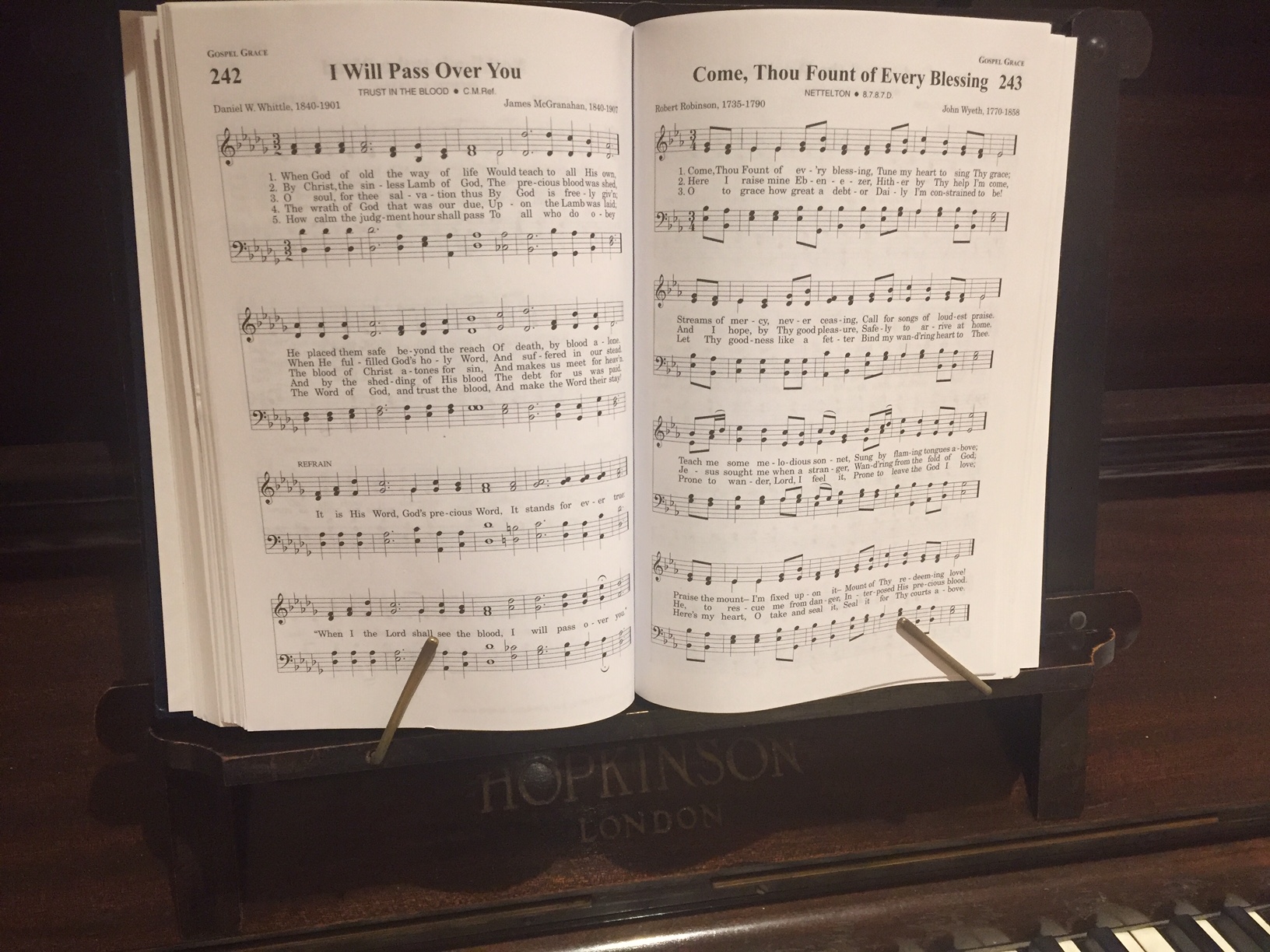
Jesus sought me when a stranger,
Wandering from the fold of God;
He, to rescue me from danger,
Interposed His precious blood. . .
(Come, Thou Fount of Every Blessing, Robert Robinson, 1758)

These words take us to the heart of Christ’s saving work on behalf of His people. It was a matter of Jesus interposing His blood! That act of interposition makes His blood precious to every believer.

More about that in a moment! First, let’s think about that word “danger.” Frightening word! When we hear the word “danger,” we tend to think of the people and the things that threaten our wellbeing and happiness in this world. There is no shortage of them.

There is, however, another type of danger which is much worse than any posed by this temporal realm. It is the danger of experiencing the wrath of God in eternity. People these days like to play down that danger, but no fair reading of the Bible will allow us to do so. All are agreed that the Old Testament places a heavy emphasis on the matter, but we must not think that the teaching of God’s wrath is confined there. The same teaching is evenly distributed throughout the New Testament. It is in the Gospels (Matt. 3:12; 7:13-14; 22:13-14; 23:33; 25:30,41,46; Mark 9:42-29; Luke 16:19-31; John 3:36), in the epistles of Paul (Rom. 1:18-19; 2:5; 3:5; 4:15; 12:19; Eph. 2:3; 5:6), and in the other epistles as well (Heb. 10:27; 12:25-29; James 5:9; 1 Peter 4:17-18; 2 Peter 2:4-9).

It is the dominant theme of the book of Revelation (Rev. 6:16-17; 11:18; 14:10,19; 15:1,7; 16:1,19; 19:15; 20:11-15; 21:8; 22:11,15).

And for those who blissfully say: “Just give me the loving God of John 3:16,” the wrath of God is powerfully present in the word “perish” which is mentioned in that very verse.

We will never understand Christianity until we realize that it is all about rescuing people from this danger! Jesus came to this world for the express purpose of dealing with that danger.

God is holy. He cannot merely ignore our sins as if they never happened. He has to pronounce a sentence on them and also has to carry out that sentence. What is His sentence on our sins? It is His wrath, which is eternal separation from Himself in hell.

The glory of Christianity is that Jesus on the cross took the wrath that we deserve for our sins. There He “interposed” or inserted His blood between the wrath of God and guilty sinners. The word “blood” means that He poured out His life in death. To say He interposed His blood is to say He interposed Himself. On the cross He took the position between the wrath of God and guilty sinners. The wrath fell on Him, and there is now no wrath left for all who repent of their sins and trust in Him. John 3:36 puts it perfectly: “He who believes in the Son has everlasting life; and he who does not believe the Son shall not see life, but the wrath of God abides on him.”

But how could Jesus in the space of the six hours that He was on the cross (from 9:00 in the morning until 3:00 in the afternoon) receive an eternity’s worth of the wrath of God for all sinners who believe in Him? The answer lies in the special nature of Jesus. He was no ordinary man. He was the God-man, fully God, fully man at one and the same time. As God, He was an infinite person, and as an infinite person, He could receive in a finite length of time an infinite measure of wrath. In other words, Jesus as an infinite person could receive in a finite measure of time what we as finite people would receive in an infinite measure of time.

When we truly understand what Jesus did on the cross for sinners, we gladly respond to Robert Robinson’s phrase “precious blood” with a hearty “Yes!”

Posted by Jim Holmes in Current Issues, Friendship, Gospel, New & Noteworthy, Publishing Books Today, Reflections, Spirituality, Theology, Windows on My Work, Writing, 0 comments
Thinking About Ford v Ferrari

Thinking About Ford v Ferrari

Thinking About Ford v Ferrari

I am preparing this blog in consultation with my son, Matthew, aged sixteen years. He and I have prepared the text below, so some of the writing is entirely his. He and I saw the movie Ford v Ferrari late last year, and, because we found it thought provoking, I also took Sue to watch it a few weeks later. The movie is PG-13, largely as there is some fallen-world language.

It’s a sports action drama, a period setting from the early- to mid-1960s, the time I was growing up. It was fun to see how authentic the setting was—the style of cars, dress, décor, etc., though it did provoke discussion as to whether the Coca Cola bottles were quite authentic.

Characters and Plot

Based on the true story of Ford’s efforts to build a car that could rival Europe’s prime car, Ferrari, at the renowned twenty-four-hour, high-speed endurance race, the story line goes something like this:

Carroll Shelby is a former race-car driver who had to quit the sport because of a heart condition. Lee Iacocca, a member of the Ford Motor Company’s board of directors in charge of marketing, is challenged by Henry Ford (Junior) to find a way to appeal to an emerging youth demographic—baby boomers—who are attracted to more attractive, high-speed foreign cars. With Shelby, he thinks he has just the man for the job. Shelby decides to build a Ford car that will have capability to win the Le Mans race, and lobbies to have Ken Miles, an old friend, in the driver’s seat. Miles, a part-time racer, part-time auto-mechanic—a British man living in LA with his wife and son—is a hothead who is unwilling to help until the IRS come knocking. And then the need for finance propels him into the position.

After much corporate resistance, the Ford company reluctantly agrees to let Shelby and Miles apply their own ideas in a way that works, even if it does not conform to conventional company values. This climaxes in several thrillingly shot racing motor-racing sequences (the surround-sound effect in a cinema adds compellingly to the experience).

Well Produced

The movie would be entertaining but nowhere near as compelling if not for the strong character acting from Matt Damon and Christian Bale—and the good direction and cinematography that undergirds the production, courtesy the skills of people such as James Mangold. The witty, clever dialogue is the frosting on the cake, as my son insists!

A Key Quote

“There’s a point, seven thousand RPM, where everything fades. The machine becomes weightless, it just disappears. And all that’s left is a body moving through space and time. Seven thousand RPM, that’s where you meet it. It creeps up near you, and it asks you a question. The only question that really matters. Who are you?”

Thought Provoking

The movie elicited several thoughts:

  • This is a reminder of how the can-do American spirit can propel gifted people to excellence, notwithstanding several circumstantial challenges along the way.
  • Challenging the status quo—that is bucking the system—is sometimes the only way to get something done.
  • Life in this world is often fundamentally not fair! (And that is a profoundly biblical line of thought.) Without giving away anything in the movie, suffice it to say that not everyone is rewarded as he should be!
  • Facts can be as entertaining as fiction; the movie is well rooted in historical fact.

Matthew offered a parting summary: “A movie about American men doing manly, American things in the masculine America of the time.”

View the Trailer HERE: or below

Featured Image Credit: https://www.rottentomatoes.com/m/ford_v_ferrari/pictures

Posted by Jim Holmes in Creativity and Aesthetics, Family and Friends, Reflections, Spirituality, Technology, Worldview, 0 comments
Thinking about Books

Thinking about Books

Thinking about Books

Earlier in the year, I was challenged on Facebook to write notes on books that I have read and enjoyed. Here are some of the notes:

Pilgrim’s Progress

My sister Margaret Jones asked me to share books that I have found significant. So I thought of my copy of The Pilgrim’s Progress and am thankful for being persuaded to purchase the cloth-bound copy as long ago as 1981! Did you know that PP is said to be the second-best-seller to the Bible?


The President, the Pope, and the Prime Minister

Continuing to engage with my sister, Margaret Jones, who asked me to share books I have found significant, I thought this time that I would reference John O’Sullivan’s “The Pope, The President, and the Prime Minister.” While there are some aspects and interpretations in the book I would not agree with, I very much enjoyed the way in which O’Sullivan wrote so engagingly about three figures who had a remarkable influence on the world in the 1980s onward.


Hard Call

As I continue this short journey of reflection on books I have appreciated over the years, as requested by my sister Margaret Jones, a leadership book by the late John McCain comes to mind, “Hard Call.” I first read it about ten or more years ago, perusing the chapters with enjoyment as I was flying from place to place in my sales and marketing job. McCain engagingly teases out lessons of leadership from a wide range of people and events! You can dip into any of the chapters without reference to the others.


A Body of Divinity

Continuing the thought of books that have made a strong impact on me, as requested by Margaret Jones, I am thinking right now of the remarkable writing of Thomas Watson, a puritan minister, who prepared, inter alia, “A Body of Divinity.” It proved to be my first puritan book purchase, and came from The Bible Centre in Pietermaritzburg in 1982.
Watson is incredibly readable. You can find something quote-worthy at random on any page. Here is one:
“The wisdom of God is seen in making the most desperate evils turn to the good of his children. As several poisonable ingredients, wisely tempered by the skill of the artist, make a sovereign medicine, so God makes the most deadly afflictions co-operate for the good of his children. He purifies them, and prepares them for heaven. 2 Cor 4: I7. These hard frosts hasten the spring flowers of glory.”
Pictured is a later edition; I am pleased to own the hard-cover edition with muted red tones!


The Forgotten Spurgeon

As I continue this occasional journey through books that have been seminal in my thinking (at the request of Margaret Jones), today’s reflection is on Iain H. Murray’s “The Forgotten Spurgeon.” I received my copy as a gift from a good friend in the early 1980s but I only read it a few years later. And when I did, it was most helpful, relative to some issues I was working through. In it, Iain Murray provides a brief bio of CHS, the so-called (and well-deserved name) of the prince of preachers, 18th century Charles Haddon Spurgeon. Thereafter, Murray traces three noteworthy issues CHS faced: baptismal regeneration, the free offer of the gospel, and the Downgrade Controversy, a battle he faced with fellow Baptists who were crumpling and crumbling under the effects of modern, liberal, Bible-denying criticism. Spurgeon’s oft-repeated saying, as I recall from memory, “Fellowship with known and vital error is participation in sin,” should be axiomatic in today’s church, but sadly is not so. There is much to learn and apply from this excellent work, and I commend it as the right medicine for many of the issues modern believers are facing.


Surprised by Joy

Continuing the meander through thoughts about books I have enjoyed over the years, as requested by Margaret Jones, the next one that comes to my mind is one by C.S. Lewis. I was a university student at the time, battling my way through a mountain of indiscriminately varied books in an English syllabus–many of them patently boring, others full of filth. Then, in a secondhand store, I came across Lewis’ little gem, “Surprised by Joy.” The title is derived from a Wordsworth sonnet and of course also has peculiar significance to C.S.L. personally. Tracing his early life and influences, the author, with grace and freshness of style, paints beautiful word pictures of the earlier parts of his life, and how even in his rebellion, he found himself finding God and grace. What an oasis this book was to me in the wilderness of everything else I was reading at the time!


Look out for more book reflections as we move into 2020!

Posted by Jim Holmes, 0 comments
Some 2019 Projects in Review

Some 2019 Projects in Review

Some 2019 Projects in Review

The year has been one of steady focus on numerous editing, production, and publishing projects. Here, in no particular order of priority, are some insights into them…and this is by no means an exhaustive list!

Devotional Poems

IMMANUEL: Poems and Meditations on the Life of Jesus: This is the second in a series of Christmas books produced for EvangAlliance Publications, an 80 page full color cloth-bound book (with loose dust jacket), with beautiful poems and is truly a magnificent production. It is a companion to a book we worked on last year, INCARNATION Poems, also by poet Tom Worth. See more HERE.


The One Anothers of the New Testament

31 Ways to be a One Another Christian An email from Dr. Stuart Scott initiated this one. He and Andrew Jin had been working on a script that teased out the implications of what the New Testament has to say about “one another.” Would Shepherd Press be interested, he asked? Of course! The year was well progressed, and an ACBC deadline for launching the book was approaching with uncomfortable rapidity, so we accelerated the editing and production and were able to launch this excellent book in October. More info HERE.


365 Plus…

Daily Readings books have a special place in my heart. There are two that have been under my purview this year, both relatively late in the year.

The first is a compilation of the wonderful My Coffee Cup Meditations books by Roger Ellsworth and family. The more I thought about it, the more I wanted to get all twelve of these volumes into one big book. And the name that came to mind was simply The Big Book of Coffee Cup Meditations. It is truly a magnificent book, cloth-bound, nearly 800 pages in length. Roger writes on the back cover as follows:

Early mornings are very predictable for lots and lots of Christians. Roll out of bed, turn on the coffee pot, pour a cup, settle into a favorite chair and enjoy what is called “the daily devotional.” This usually consists of reading a passage from the Bible and a selection from a daily readings book. It concludes with prayer.

Believers who follow this pattern can go through a good number of devotional readings as the years go by. So they are always looking for new material—something to go along with their Bible and their coffee.

Hoping that I could be helpful in supplying the need for more of these kinds of readings, I gathered up some articles I had written and put them in a book—A Dog and a Clock. The idea was to supply brothers and sisters in Christ with enough devotions to carry them through one month. That quickly led to another book—The Thumbs Up Man—to carry “devotion-doers” through another month—and so on.

You can guess what happened after three or four books came out. There are twelve months in the year. So why not provide enough books to cover a year? Well, off we went and out the books came until there were finally twelve! Since these books were designed to go with the Bible and a good cup of coffee, it seemed right to call them My Coffee-Cup Meditations. Here are all twelve books in one big volume—372 readings in total!

More information HERE.

A good friend and former colleague connected me with new friends in TMAI–The Masters Academy International–in California who were in the final stages of preparing a large devotional book with multiple authors for publication. Would I help guide it through the process? The timing was tight, but the outcome is a beautiful (nearly 400 page) book, Declaring His Glory among the Nations. An edition of this book is available on Amazon HERE.


Esther: For Such a Time as This

Colin Mercer labored faithfully in Greenville, SC, for about a decade. I got to know him and appreciate his preaching at Faith Free Presbyterian Church. Friends there, Charles and Verta Koelsch, worked tirelessly on Colin’s sermon notes to prepare a very useful book on God’s care and providence as seen in the Old Testament book of Esther–with the title For Such a Time as This: The Sovereignty and Goodness of God in the Book of Esther. The outcome is a beautifully produced book of 176 pages. An edition of this book is available on Amazon HERE.


Tennessee Author Friends

Reggie Weems is a good friend in ministry in Eastern Tennessee, and we just released an excellent introduction to C.S. Lewis. In his series of “Ten Things About…”, the new The Man Who Made Narnia is a welcome addition to a man whose influence is truly remarkable. Also in preparation for 2020 is Good, But not Safe. The first title is available on Amazon HERE.

Dave Harrell, also a pastor in Tennessee, wrote a very good book on pastoral leadership. It was my pleasure to guide this through the editing and publishing process at Shepherd Press early in 2019. Soon after this was complete, Dave reached out to me with the thought of how his ministry, Shepherds Fire, could publish mini-books. After conferring on some strategic options, we came up with the idea of “The Compact Expository Pulpit Commentary Series,” small books of around 88 pages, each one packing a powerful punch in terms of both content and application. You can read more about Dave and his ministry HERE and obtain his books on Amazon as follows:

  • God, Evil, and Suffering HERE
  • God’s Gracious Gift of Assurance HERE
  • Our Sin and the Savior HERE


South African Connections

Dr. Francois Carr is based in Pretoria, South Africa, and has a global ministry in calling people to Christ and a consecrated walk with Him. One of his earlier books, Lead Your Family in Worship, had gone out of print. Francois reached out to me with the question: How could this book be brought back into print? Well, we found a way! We did a couple of prototype runs and the book has a few tweaks to go, and we expect to launch the agreed final version early in 2020. 

“It is an old but good saying that families which pray together stay together. This refreshingly up-to-date book on family worship is a valuable contribution to a much-neglected area of Christian practice. May God be pleased to bless its teaching to many.”–Rev. Maurice Roberts: Minister, Free Church of Scotland Continuing, Inverness, Scotland

The contents for Francois’ book are good for whetting the appetite:

Introduction
1: A Forgotten Command of God
2: Why is Family Worship Necessary? (A)
3: Why is Family Worship Necessary? (B)
4: Why Don’t Families Worship Together Anymore?
5: Common Excuses for Not Having Family Worship
6: How Do I Prepare Myself and My Family for Worship?
7: How Do We Worship as a Family?
8: What are the Foundations of Family Worship?
9: A Final Encouragement
Appendix 1: Where Do I Start?
Appendix 2: Suggested Format for Family Worship
Appendix 3: Suggesed Format for Family Worship
Appendix 4: An Example of Family Worship

The Man in the Gap Martin Holdt was my pastor for many years in South Africa. A good and godly man, the story of his life is more than worthy of being told. Friends Rex and Esta Jefferies in South Africa have labored hard to prepare a biography, and they and I have been exchanging files for a couple of years or more to get the text prepared for publication. We anticipate launching this book in the first quarter of 2020. Dr. Joel Beeke in the Foreword describes this as a “must-read” book!

Here are three fragments from Dr. Beeke’s  Foreword

I love good biographies of godly men. They are so stimulating, convicting, edifying, moving, challenging, and alluring. This is one of those biographies. It is a “must read” book—one that is so true to a godly pastor who lived, by God’s grace, wholly for Christ and out of love for the souls of people.

Martin Holdt was one of the very best friends in Christ Jesus that I have ever had. He was also one of the most godly people I have ever known. When he died so suddenly in the last week of 2011, I grieved as if I had lost a brother—because I did. He was like an older brother to me.

Read this book prayerfully, meditatively, and slowly. I pray God that Martin Holdt’s life story will move you to follow him insofar as he followed Christ.

Posted by Jim Holmes, 0 comments
My Coffee-Cup Meditations

My Coffee-Cup Meditations

It All Started with a Phone Call…

I was driving at the time. Roger Ellsworth had emailed me and shared the idea of publishing some short topical articles he had written over the years for local newspapers in towns where he had ministered. His thinking was that a book of thirty or so Bible-themed reflections might be worth publishing.

Roger & Sylvia Ellsworth

“Roger, I cannot talk for long as I am driving,” I recall telling him, “but I think the readings you emailed me are brilliant. I think we should pursue these for publication. Do you think you could write more than the thirty or so you have sent me to take a look at?”

“Well, sure I could,” came his answer, his modest tones a little muffled against the background noise of my old Volvo as I drove toward Bob Jones Academy to pick up my son at the end of his school day. “Are you thinking we could make a short series?” he inquired.

“Yes, that’s the idea,” I responded as I eased my car onto Rutherford Road. “And I think we need to find a way to give the books a catchy look and feel. It’s likely that there won’t be too much of a response just to a one-off or two-off book of devotions. I think we have to make the books connect and engage.”

A day or two later, Sue and I were discussing the idea further. “We need something that will connect with the culture,” she said insightfully. “Something like coffee; could you brand them with that kind of idea?”

Well, that’s how it all started. My Coffee-Cup Meditations. We found a way to get some really nice graphics, and Roger, careful and disciplined writer that he is, soon had many more topics lined up that he could write on.

We defined the series right at the start with a strong and clear mission:


My Coffee Cup Meditations are short, easy-to-read, Bible-based devotions to help you consider God’s greatness, the wonderful gospel of Jesus, and be better equipped for life here and hereafter.


I think the series is achieving this. We are not much more than a year on from when we started, and already there are nine books in print. The final three are presently in editorial preparation and expected to release in November this year!

There is a dedicated website (another of my projects) to tell you much more about this delightful series. Visit www.mycoffeecupmeditations.com for much more information!

Posted by Jim Holmes in Gospel, Reflections, Spirituality, Writing, 0 comments