Current Issues

Rudolph W. Giuliani on Leadership

Rudolph W. Giuliani on Leadership

Rudolph W. Giuliani on Leadership

He faced the camera, his poise one of confidence, giving me, a viewer, a sense that he was in charge of the post-9/11 cleanup operation—and what an operation that was. That was my first impression of Mayor Rudy Giuliani of New York City as I watched my TV in Darlington, England. Subsequent views of the same man confirmed my impression that here was a man of competence, a leader, someone inspiring confidence in the stark face of deep trauma, a trauma that was felt by not only New Yorkers, but by people all round the world.

Fast forward nearly two decades: When I saw a secondhand book by Rudolph W. Giuliani in a thrift store in Greenville, I was tempted to buy it, but thought of the many other books at home clamoring for my attention. But I yielded and went back a week later and purchased a copy: Leadership

Written in three parts, the table of contents asserts several propositions about leadership, as below, which the author then engagingly develops in just under 400 pages.

1 September 11, 2001

2 First Things First

3 Prepare Relentlessly

4 Everyone’s Accountable, All of the Time

5 Surround Yourself with Great People

6 Reflect, Then Decide

7 Underpromise and Overdeliver

8 Develop and Communicate Strong Belief

9 Be Your Own Man

10 Loyalty: The Vital Virtue

11 Weddings Discretionary, Funerals Mandatory

12 Stand up to Bullies

13 Study. Read. Learn Independently

14 Organize Around a Purpose

15 Bribe Only Those Who Will Stay Bribed

16 Recovery

Giuliani’s childhood was shaped by strong Roman Catholic values, a love for history, an optimistic sense of what it is possible to achieve in this world, and, at times, being egged on to a good display of streetwise behaviors that helped him in his adult years to face down bullies and crooks.

The author’s can-do spirit breathes optimism through the book. At times, I found myself disagreeing with some of his faith values—I am protestant to the core—but I found myself loving his sincerity and zeal for faith as he knows it, and especially his commitment to a Judeo-Christian worldview and its outworking in the form of faith, family, and a good, solid work ethic—typical of a classical conservative. His treatment of the so-called squeegee men in NY is classic—Charge them for jaywalking, was his take on it. Nobody had thought of that!

At times a little self-congratulatory, Giuliani nevertheless charms the reader with his love for life, his love for doing the right thing, and for being a fighter to this end. And there is much in this book for ordinary people who are striving for excellence even within their own relatively minor circles. There is a feast in the chapter titles alone. I read this book over the course of a few months in bite sizes at occasional times of the month—in waiting rooms, waiting for a kettle to boil, and at other spare moments. The takeaways, for me, are largely in the propositions in the table of contents. There are many action points to be derived from these. I’ve seen too much blithering leadership in my circles—whether church, publishing, or charity work—over the years. Would that many leaders and prospective leaders would take on board some of Giuliani’s ideas and principles!

Featured image from www.biography.com/.image/t_share/MTQyODE5Nzc1NDczNTI2NTU2/rudy-giuliani-gettyimages-470786844_1600jpg.jpg
Posted by Jim Holmes in Current Issues, Reflections, Worldview, 0 comments
He To Rescue Me from Danger Interposed His Precious Blood

He To Rescue Me from Danger Interposed His Precious Blood

It’s a delight to share the labors of faithful authors. Roger Ellsworth is one such author, gifted with the ability to write seriously yet simply, and opening the Scriptures in a way that children as well as adults can understand. This guest post draws material from Roger’s Big Book of Coffee Cup Meditations, a book recently published, and available from bookstores or Amazon worldwide. More info HERE.


“He, to Rescue Me from Danger,
Interposed His Precious Blood”


From God’s Word, the Bible…

And if you call on the Father, who without partiality judges according to each one’s work, conduct yourselves throughout the time of your stay here in fear; knowing that you were not redeemed with corruptible things, like silver or gold, from your aimless conduct received by tradition from your fathers, but with the precious blood of Christ, as of a lamb without blemish and without spot. He indeed was foreordained before the foundation of the world, but was manifest in these last times for you.
1 Peter 1:17-20

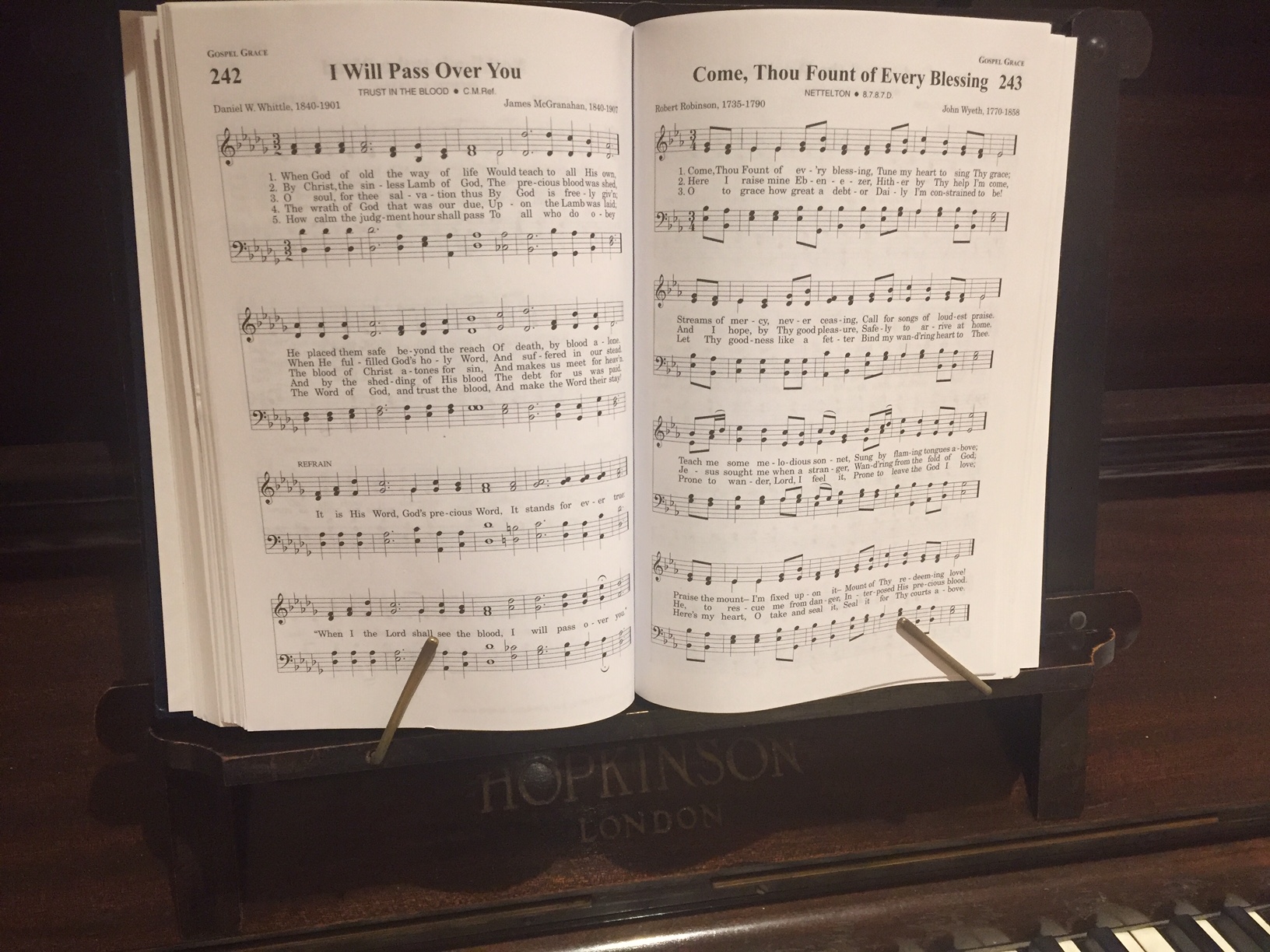
Jesus sought me when a stranger,
Wandering from the fold of God;
He, to rescue me from danger,
Interposed His precious blood. . .
(Come, Thou Fount of Every Blessing, Robert Robinson, 1758)

These words take us to the heart of Christ’s saving work on behalf of His people. It was a matter of Jesus interposing His blood! That act of interposition makes His blood precious to every believer.

More about that in a moment! First, let’s think about that word “danger.” Frightening word! When we hear the word “danger,” we tend to think of the people and the things that threaten our wellbeing and happiness in this world. There is no shortage of them.

There is, however, another type of danger which is much worse than any posed by this temporal realm. It is the danger of experiencing the wrath of God in eternity. People these days like to play down that danger, but no fair reading of the Bible will allow us to do so. All are agreed that the Old Testament places a heavy emphasis on the matter, but we must not think that the teaching of God’s wrath is confined there. The same teaching is evenly distributed throughout the New Testament. It is in the Gospels (Matt. 3:12; 7:13-14; 22:13-14; 23:33; 25:30,41,46; Mark 9:42-29; Luke 16:19-31; John 3:36), in the epistles of Paul (Rom. 1:18-19; 2:5; 3:5; 4:15; 12:19; Eph. 2:3; 5:6), and in the other epistles as well (Heb. 10:27; 12:25-29; James 5:9; 1 Peter 4:17-18; 2 Peter 2:4-9).

It is the dominant theme of the book of Revelation (Rev. 6:16-17; 11:18; 14:10,19; 15:1,7; 16:1,19; 19:15; 20:11-15; 21:8; 22:11,15).

And for those who blissfully say: “Just give me the loving God of John 3:16,” the wrath of God is powerfully present in the word “perish” which is mentioned in that very verse.

We will never understand Christianity until we realize that it is all about rescuing people from this danger! Jesus came to this world for the express purpose of dealing with that danger.

God is holy. He cannot merely ignore our sins as if they never happened. He has to pronounce a sentence on them and also has to carry out that sentence. What is His sentence on our sins? It is His wrath, which is eternal separation from Himself in hell.

The glory of Christianity is that Jesus on the cross took the wrath that we deserve for our sins. There He “interposed” or inserted His blood between the wrath of God and guilty sinners. The word “blood” means that He poured out His life in death. To say He interposed His blood is to say He interposed Himself. On the cross He took the position between the wrath of God and guilty sinners. The wrath fell on Him, and there is now no wrath left for all who repent of their sins and trust in Him. John 3:36 puts it perfectly: “He who believes in the Son has everlasting life; and he who does not believe the Son shall not see life, but the wrath of God abides on him.”

But how could Jesus in the space of the six hours that He was on the cross (from 9:00 in the morning until 3:00 in the afternoon) receive an eternity’s worth of the wrath of God for all sinners who believe in Him? The answer lies in the special nature of Jesus. He was no ordinary man. He was the God-man, fully God, fully man at one and the same time. As God, He was an infinite person, and as an infinite person, He could receive in a finite length of time an infinite measure of wrath. In other words, Jesus as an infinite person could receive in a finite measure of time what we as finite people would receive in an infinite measure of time.

When we truly understand what Jesus did on the cross for sinners, we gladly respond to Robert Robinson’s phrase “precious blood” with a hearty “Yes!”

Posted by Jim Holmes in Current Issues, Friendship, Gospel, New & Noteworthy, Publishing Books Today, Reflections, Spirituality, Theology, Windows on My Work, Writing, 0 comments
The Writing Apologetic Ministry of Edgar Andrews

The Writing Apologetic Ministry of Edgar Andrews

The Writing Apologetic* Ministry of Edgar Andrews

*Apologetic: Here meaning having to do with the defense of, or reason for, the faith that one holds.

I first met Professor Edgar Andrews in 1999. I recall him, distinguished, articulate, erudite—in many ways, just what you might expect a professor to be. At the time, he was chairman of Evangelical Times and Evangelical Press. I had just relocated to England and was finding my feet in a new climate, adjusting to a new work situation, meeting new friends, discovering the joys of navigating around English traffic roundabouts (“Who gives way to whom, or do you just pray and take a chance?”) and experiencing many other new things. Our pathways would cross at occasional board meetings and when he would come to the Faverdale office in Darlington to oversee the production of the monthly paper.

We enjoyed good interactions whenever we met. I knew Prof. Andrews was much more than a brain on legs, but I always felt somewhat in awe of his great intellect—a man who knew so much about the science of materials, and yet who was at home with English literature, history, theology, ancient Greek, and many other disciplines.

I had first known of him through various of his writings, and in South Africa had enjoyed selling his books in several of my sales initiatives through Reformation Heritage Trust, subsequently renamed Barnabas Book Room. Always solid in their content, always clearly written, always with modern application, his books resonated with me and with the reading clientele Sue and I served…

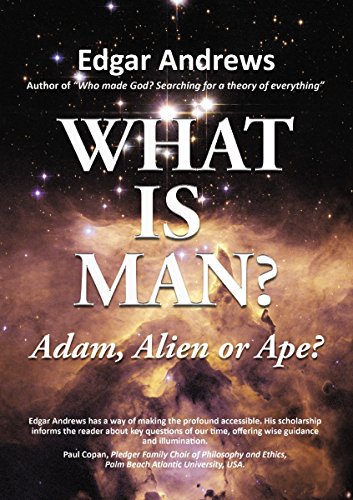
So when Edgar contacted me again some years after I moved to the USA, I was delighted to have the opportunity of working with him again on some new projects. One of his earlier publications, Who Made God?, had captured the imagination of the reading public, selling tens of thousands of copies. “I’ve been working on a new book, one on the origin of man, titled What is Man—Adam, Alien or Ape?—do you think you could help promote it?” Edgar asked me. His explanatory email was predictably through in his description of the text and his plans for promoting it internationally. Of course, I was delighted to do so, and once it was in print, it was my pleasure to review it in these words—which you may read on Amazon HERE. (It’s a very good book—as I think you will see from my review notes.)

My Amazon Review Notes

A sequel to his bestselling book, “Who Made God?”, Edgar Andrews’ book “What is Man?” is a carefully thought-through, well prepared, wittily and engagingly written piece.

The author’s background in both arts and science (he is a well-rounded intellectual) eminently qualifies him to write both at length and in depth in areas of science, philosophy, literature, art, and the Christian faith—the latter from a well-informed perspective of faith. He engages robustly with some important minds along the way.

While Professor Andrews might be described as a “brain on legs,” he is a very capable communicator, taking complex concepts and subjects, breaking them down into bite-sized examples, making judicious use of illustrations to simplify them (yet without being simplistic) and then drawing lines of application to modern life and especially in challenging the thinking of people who may have mistakenly and uncritically imbibed the presuppositions and worldview of a generation who have more often been informed by talk-shows and TV than by well-reasoned scientific disciplines and carefully considered theological and philosophical conclusions.

To sketch the book by way of overview, Professor Andrews takes readers, as it were, by the hand (never condescendingly) and guides them page by page, step by step, idea by idea, through a maze of considerations considered within three categories: Man and the Cosmos, Man and the Biosphere, and Man and the Bible.

Under the first part, (Man and the Cosmos) the author gives consideration to key concerns such as the identity of humankind, the impossibility of the universe being self-creating, the willful conjecture of the media in inventing and embellishing highly detailed “facts” when there is no undergirding evidence, the habitability of the world (what he refers to as a fine-tuned universe) and the difficulties posed by the conceptualization of a multiverse.

Part 2 (Man and the Biosphere) considers people as unique creatures, traces the ramifications of the complexity of genetic mapping, spends some time on speculations that have arisen in light of fossil research and dating, and rounds off with some philosophical and ontological sketches with respect to human consciousness.

The third part of “What is Man?” (Man and the Bible) begins to draw many of the ideas heretofore explored into a unified conclusion, and provides a probing analysis of worldviews, the historicity of the fall of our first parents, the imago dei, Christ as the Second Adam, and the undeniability of the resurrection of Jesus.

Is this a “preaching, condescending kind of book”? I didn’t find it so. The author’s calm writing style, his eloquence, his gentle wit—these are all engaging features. In it all, I felt he was letting his readers come to their own conclusions at their own speed. Truth is compelling. Truth has the power, under God, to be life-transforming. This is the kind of book most people will easily be able to read. Be sure you are one of them and get one—and an extra one or two, too, for a family member or work colleague whom you might like to challenge to rethink some aspects of life!

Other Writings of Professor Edgar Andrews

I have worked with Edgar in lightly editing, reformatting, and republishing his most helpful book on Galatians (EP Books used to have it in the Welwyn Commentary Series—though Great Writing Publications it is titled Free in Christ—The Message of Galatians for Today) (more about that in another blog entry another time) and it’s on my radar soon to have his excellent commentary on Hebrews—A Glorious High Throne—back in print, also in the Great Writing Publications imprint.


Posted by Jim Holmes in Biblical Creationism, Current Issues, Gospel, New & Noteworthy, Publishing Books Today, Worldview, Writing, 0 comments
“Ten Things About” from Reggie Weems

“Ten Things About” from Reggie Weems

A Longstanding Friendship Brings About New Book Series

I first met Reggie Weems at one of those conferences I was attending in the early 2000s–I do not recall whether it was Together for the Gospel or, maybe more likely, Shepherds’ Conference near Los Angeles. Anyway, we connected. I was living in the UK at the time, and he was residing in eastern Tennessee.

I remember speaking to him by phone one day. Somehow, he had gotten my number, and the distinctive tones of his voice enabled me to remember that he was “the man I had met at the conference.” The name and the face (at the stimulus of the voice) immediately connected with me.

“Might you be able to write a book on missions?” I remember asking him once while we were having dinner in Johnson City (I was visiting him and a book distributor on the same trip). He had already contributed a few books to the publisher I served at the time, Day One. He had me enthralled as he told me of his various strategies for fostering a vision and sensitivity for global missions in his church, a Southern Baptist congregation, well named Heritage Baptist Church. It was my pleasure to superintend the publishing process of that book, as well as having overseen the earlier publications.

Smoky Mountain Range: Hills of North Carolina / Eastern Tennessee, not far from where Reggie lives.

Thinking of a New Series. . .

With changes in my circumstances and my no longer working for the same UK-based publisher, the friendship continued without interruption. Then one day Reggie called me: “I have some manuscripts that I think could work well for books,” he informed me. “They are the fruit of some things I am doing with my congregation at the moment, and deal with real issues my people are struggling with.”

As he continued, the vision grew for me. Reggie, ever practical in meeting the needs of his congregation, ever faithful in his application of the Word of God, ever hardworking and diligent to present the counsel of the Scriptures in an understandable format, outlined to me the kinds of topics he wished to write on. He intended them to be “a series of books that offer biblical encouragement and practical direction on matters of concern to modern Christians.” That may be a broad-brush description, but take a look at some of the titles that we were to kick off with:

  • Marriage and How to Create a Godly One
  • Pornography and God’s Grace to Husbands
  • Revival and the Outpouring of the Holy Spirit
  • Unanswered Prayer and How to Live with It

“You’ll need a website to help promote these,” I guided him. “I think there is enormous potential in this concept. When can we start?”

Start we did late in 2017 and worked intensively to produce the first four. The books are available for physical purchase in print as well as in Kindle format. Each book is under 10,000 words in length, produced on a small, paperback format (small enough to fit in a pocket or purse, usually around 80 pages), and written in brief, easy-to-read chapters with key review points and quotes highlighted for easy reference. You can find out more about the series (and check out some previews) at the dedicated website HERE.

The books are available worldwide and Amazon offers easy purchasing and shipping options for most customers.


This slideshow requires JavaScript.

Posted by Jim Holmes in Current Issues, Friendship, New & Noteworthy, Publishing Books Today, Spirituality, Writing, 0 comments
Everything Says, “GLORY!” (Jim Albright)

Everything Says, “GLORY!” (Jim Albright)

Everything Says, “GLORY!” (Jim Albright)

Our pathways crossed some years ago when I was introduced to Jim Albright and helped him get his first book into print. We kept in contact, and some months ago, he reached out to me and mentioned he was ready to do his second book–and would I help him to do so? Well, the pleasure was all mine!

In the book, Jim Albright really does a great job to undermine and demolish some of the axiomatic beliefs of evolution. And what is so useful about it is that he uses many “insider” quotes from the evolutionists themselves in pointing out the weaknesses and inconsistencies of their assumptions and conclusions. As the blurb on the back cover of the book puts it,

In seven articulately written chapters, Jim Albright persuasively pinpoints and exposes the pseudo-scientific tenets of macro-evolutionary thinking. Replete with quotations from scientists across many disciplines, this is a book that every Christian should own. Missionary Keith Jones is right, “The best part of this book is that it will provoke you to a whole new level of worship!”

The book comes with several compelling endorsements, such as

  • “. . . a staggering number of relevant (often shocking) quotations from scientists and researchers.”—Professor Don Whitney
  • “Albright makes the case in a way that causes you to say, ‘How could it be possible to believe in evolution?’”—Pastor Jim Elliff
  • “. . . utilizes scientific and logical evidence to expose the lie that evolution is.”—Professor Jim Ehrhard
  • “My advice, dear reader, . . . sincerely contemplate what you find in these pages.”—Pastor Lance Quinn
  • “. . . your tongue and heart are loosed to speak what you know is true with confidence and assurance.”—Missionary Alan Johnston
  • “A great resource for the church . . . a layman’s synopsis.”—Pastor Brad Vaden
  • “. . . a treasure of quotable science.”—Pastor Dow Welsh
  • “Read this book closely; think deeply; observe inquisitively; worship passionately.”—Pastor Doug Richey
  • “The best part of this book is that it will provoke you to a whole new level of worship.”—Missionary Keith Jones

Peacock and Poppycock

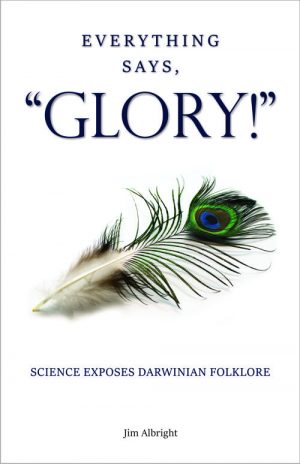
My colonial and English background make me rather like the word “poppycock.” Jim uses it to good effect in some descriptive text. There is a peacock motif that runs through the book. That was really why the cover was so important to “get right.” Below is the text from some early matter in the book:


About the Cover

So, why the peacock feather on the cover? Because Charles Darwin hated it. He wrote, “The sight of a feather in a peacock’s tail, whenever I gaze at it, makes me sick!”[i]

The obvious problem was that he did not know how to plausibly explain this large, mathematically patterned, jewel-colored, gratuitous display of beauty in evolutionary terms. A peacock tail can stand five feet high. And all those cumbersome feathers are most inconvenient regarding the chief survival-of-the-fittest issue—namely, not being eaten. This was no small dilemma for Mr. Darwin.

In keeping with his general approach to science, Darwin concocted a story. Give the man credit. He knew how to weave a narrative. This is, of course, the foremost skill of his disciples. Storytelling is far less bothersome than engaging in the exacting rigors of real science.

Darwin proposed a theory of sexual selection. That is, peahens prefer peacocks with the best tails. Best meaning, the biggest and most colorful. The gaudier the tail, Darwin surmised, the better the peacock would fare with the peahens, and consequently pass on more of the flamboyant plumage genes to male offspring.

Oops. Yeah, this doesn’t actually happen. This is where storytelling, as opposed to truly doing science, puts one in a bit of a bind. A “seven-year study that observed 268 matings”[ii] conducted by scientists seeking to confirm Darwin’s theory, found that peacock sexual selection based upon the coolest tail, is, and sorry, I couldn’t resist borrowing Ph.D. David Catchpoole’s quote, “poppycock.”[iii]

The “tail tale”[iv] is the perfect parable of Darwinian evolutionary theory. It’s all just unsubstantiated anecdotes. Regarding the macro-Darwinian hypothesis, there is no hard data. Zero. But oh, what a fanciful myth of unparalleled imagination has been fabricated for the incurious and unwary!

Darwin hated the peacock feather. It makes no evolutionary sense. Exactly!

[i] Charles Darwin and Francis Darwin, The Life and Letters of Charles Darwin, including an Autobiographical Chapter, Vol. 2 (New York: D. Appleton, 1911), 90-91.

[ii] Catchpoole, D., Peacock tail tale failure, creation.com/tale, 2008. (Creation 31(2):56–Jun 2008).

[iii] Catchpoole, D., https://creation.com/peacock-poppycock (Creation 29(2):56 – Mar 2007).

[iv] Ibid.


Read more about the book HERE.

Purchase the book on Amazon.com HERE

Purchase the book on Amazon.co.uk HERE.


Jim Albright: At the age of 42, Jim left a twenty-year business career to answer God’s call to preach. Since early 2004, he and his wife, Karen, have lived in Milan, Italy, where Jim is the pastor of the International Church of Milan, a non-denominational, Bible-believing, and Bible-teaching church ministering to internationals from around the globe.

Posted by Jim Holmes in Biblical Creationism, Current Issues, Gospel, New & Noteworthy, Publishing Books Today, Worldview, Writing, 0 comments
Thinking About Christmas in September

Thinking About Christmas in September

“May I Wish You a Merry Christmas Right Now?”

“No, it’s too soon,” I think I hear you respond.

Really? Why’s that? Aren’t you concerned to celebrate the wonder of

th’eternal, contracted to a span
incomprehensibly made man

(the couplet is from a hymn by Wesley)? God was revealed in the flesh. Do you know that? Do your neighbors know that? Do your fellow workers understand the implications of that? Do your family members have it in their brains that Christ “made Himself of no reputation, taking the form of a bondservant, and coming in the likeness of men. And being found in appearance as a man, He humbled Himself and became obedient to the point of death, even the death of the cross” (Philippians 2:7-8)?

In 2016, Roger Ellsworth and I consulted on some writing he had done on the Christmas theme, and together we came up with the idea of The Twelve Days of Christmas–Morning and Evening Thoughts on Immanuel: God with Us. We edited and compiled it into twenty-four readings on Bible-based themes woven into short, easy-to-read chapters, and people love them!

Customization and Special Price Deals!

The project is run in affiliation with SermonAudio.com. We describe the mission of the project in these words:

The Twelve Days of Christmas is a small, easy-to-read book written in short sections. Its aim is to help the hearts and minds of believers to focus on the wonder of the incarnation, as well as to encourage unbelievers to come in repentance and faith to Christ.

This is the third year we are running this promotion, and, to celebrate our third anniversary, we are adding some different covers to choose from, and we are also making the whole offer online so you can choose exactly which cover  or covers you would like to get, and which underlying Bible version quotes should be used in the books you order. Check it out on the designated website, www.twelvedaysofchristmas.net.

I have shared about this project before, and you could read more  HERE and HERE.

For cover designs, see HERE.

For pricing, see HERE.

View the recently added covers in the slide show below.

This slideshow requires JavaScript.


Posted by Jim Holmes in Current Issues, Gospel, Heritage, Publishing Books Today, Writing, 0 comments
Favorites 4: Innovation and Endeavor

Favorites 4: Innovation and Endeavor

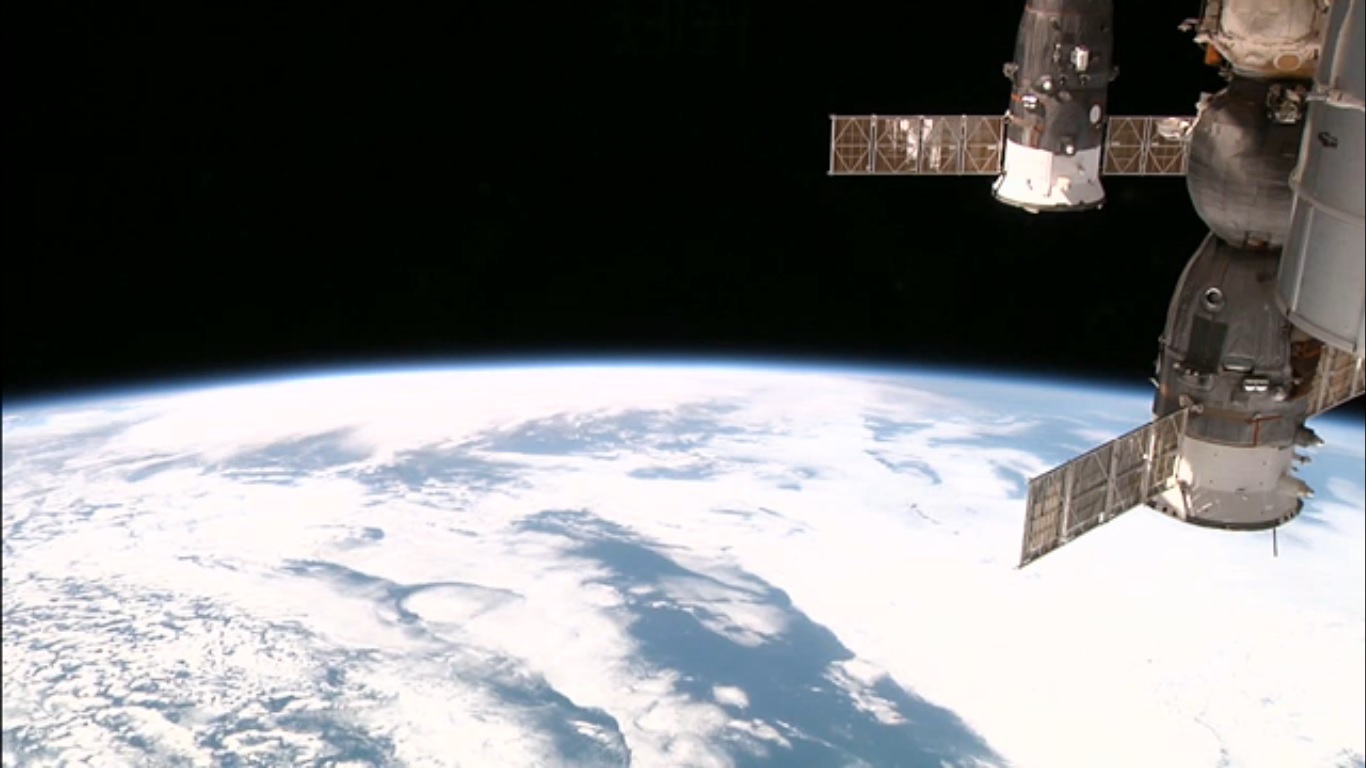
View Planet Earth from the Orbiting International Space Station

ISS_Tracker_Screenshot

Tracker map detail. Click to enlarge.

This has to be one of the most fascinating sites you can visit. I like to view two sites simultaneously (or, rather, to toggle between them):

What is really neat about the second link is that you can zoom the view and also get a map or hybrid view. And you can observe the velocity and altitude (in miles!) of the craft!

Psalm 111:2 “The works of the Lord are great, sought out of all them that have pleasure therein.”

Psalm 24:1,2 “The earth is the LORD’s, and the fulness thereof; the world, and they that dwell therein.For he hath founded it upon the seas, and established it upon the floods.”

Video clip below, screen capture for 20 seconds, ISS south of Australia, 20180920


The Car That Can Fly

Maverick_Steve_Saint

Maverick in flight

This is about Steve Saint, son of Nate Saint (remember the account of Jim Elliot, murdered in the early 1950s, by the Auca Indians in Ecuador?). View the YouTube video below of Steve’s invention.

(Jim Elliot famously said, “He is no fool who gives up what he cannot keep to gain what he cannot lose.”)

This is a fine example of endeavor driven by a real and practical need on the one hand, and a zest to bring the message of God’s love and grace, in practical terms, to people out of normal and easy reach.

Come to think of it, to buy a flying car for a price ticket of around $80,000 sounds quite good!


Posted by Jim Holmes in Current Issues, Gospel, Heritage, Technology, Worldview, 0 comments
Publishing: 4

Publishing: 4

Jim Continues His Thoughts. . .

Who Moved My Cheese?

The cover design of the book caught my eye as well as the title. “Who Moved My Cheese?” it asked. It was a slender volume, no more than 96 pages as I recall, and it told the story of a number of mice that had to face change in life. The longstanding supply of cheese from which they have helped themselves is no more. “What is to be done in securing more cheese?” is the challenge facing these four mice. Written as a parable that takes place in a maze, the story engagingly describes Sniff and Scurry, and their associates, Hem and Haw, and how they go about finding more cheese. Spencer Johnson’s intention is to introduce readers to the concept of positive change and how to cope with it.  The book makes for engaging reading.

Shifting paradigms are always interesting, especially when they involve adjusting to new ways. Just because something has always been done in a particular way is no guarantee that such a way will always work—or that it cannot be improved.

When I first purchased my AB Dick printing press in the 1990s (more HERE), there was really only one way to produce books cost-effectively: by printing quite a lot at a time. The prevailing philosophy in the printing industry was to find a sweet-spot—establishing a printing number that was high enough to enable unit price to be attractive but not causing the publisher to have to mortgage his house to pay for the print run and then take take forever to sell the books—and not too short a print run to sell all copies too quickly. Of course, the fact that I owned a printing press did give me a strategic advantage at least when it came to the printing of sales leaflets and catalogs, but book printing was really a larger and more complex operation than my press would be able to manage.

After I relocated to Britain, the first publisher I worked for in the UK operated on the principle of having access to a fairly big warehouse to keep all the books safely stored during the time they were being fed out to the marketplace. Paper and print does not accrue in value under those circumstances, and it can be challenging to keep a large warehouse tidy and functioning in an orderly way. Maybe that got my thinking going about whether there was a better, a different way…

Other publishing wisdom I encountered in the early 2000s went like this: “We’ll print books in large quantities, but first find publishing partners—that is, buyers with whom we can engage in a kind of strategic alliance.” I liked that. It meant that the financial load could be spread and shared between two or more parties, stakeholders in each instance, and created a strong and efficient force for buying print and then for moving it into the market. I do still very much favor this approach, and I think it works really well under the right conditions.

Enter Amazon

The “Big A” has changed a lot of things. At one time, nobody took Amazon too seriously, but not so anymore. Amazon’s ability to operate on a relatively low overhead and to have negotiated specially preferential, volume-related relationships with shippers has dealt the death knell to many vendors who had maybe become comfortable with the status quo. The reality is that people’s buying habits have changed and continue to do so. Most people today are quite relaxed in making online purchases.

So What About a New Author?

Where does a new author, someone not yet published, fit into this shifting paradigm? There are many variables, but it’s usually fair to say that the new author is relatively without connections and can offer no track record to a prospective publisher. Jack Canfield (co-originator of the Chicken Soup for the Soul books) records how he had to work exceptionally hard to find a publisher who was prepared to take the risk with his publishing idea. But that publisher was not unhappy with the outcome. (Canfield has subsequently had several New York Times bestsellers to his credit.)

It’s a hop, skip, and jump (at least in one sense) for an unpublished author to fly solo, and there is significant temptation to do so. The ease with which self-publishing can take place has given newbie authors a lot of rope. Some such authors make good use of the rope for hanging themselves, speedily finding an in-law to help with the editing, a friend to design the cover, and a teenager to help with the uploading of files to the printer; others are more cautious and with due circumspection do a better job. The point is that homemade usually looks homemade. I’ve seen enough to make me queasy!

But let me get back to my story and to tell you why I publish. . . and to address three important questions that need to be kept under consideration.

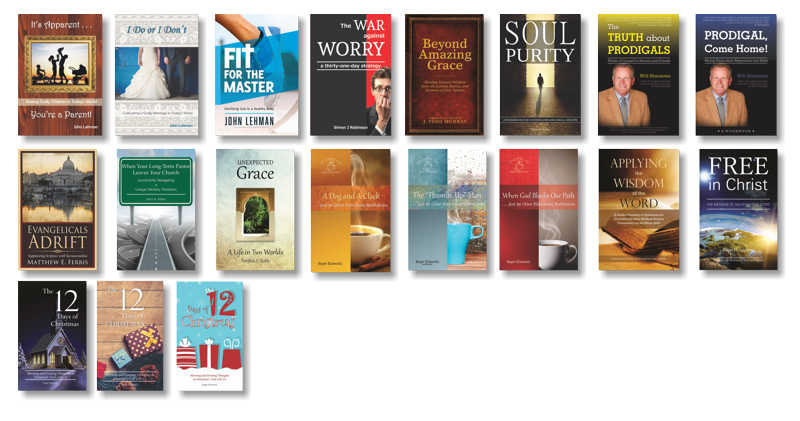
Below: Some of the books I have published so far

1. The Question of  Editing, Design, and Production Quality

It soon became apparent that I could easily help a new author (or an established one) bring a very presentable book into print. And that was gratifying for me as well as for the author! Editing and book design are closely related, and I found that even as I was working with an author, ideas were coming to me in terms of how we could develop the work to make it look like a nice project once it was in print.

Any would-be self published author MUST think carefully about how to achieve an outstandingly good result!

2. The Question of Financial Risk

So, now finding myself in the position of working with authors and others in the publishing realm, but without a full-time employer, my instinct was to push forward and to push hard in developing a new model, one that would facilitate the kinds of people who are gifted writers, but who, for whatever reason, are not able to achieve success with a mainstream or established publisher. One of the most likely things that will happen to a self-published author is that he or she will end up with numbers of cartons of a well (or badly) produced book in the garage. The first ten or twenty copies were relatively easy to sell (or give away as complimentary items); and then things just dried up. That can be an expensive mistake!

DSR Printing

So I reasoned that we could find a way around that by using digital short-run printing (costs have become much lower in recent years) so that only a small number of books at a time would need to be produced. Wow! That made such a difference to how people saw things! In fact, I coined the term “Perpetually in Print” (more info HERE). An author’s book never has to go out of print. And an author never has to face the sight of cartons of unsold print in the garage gathering dust!

Then I turned my attention to how I could help people promote (and therefore sell) their books. That was fun, if you find Facebook and such portals to be fun! This is all about enabling an author to use his or her voice and to achieve maximum amplification through low-cost or no-cost promotional portals. But that’s for another post I’ll write another time!

3. The Question of Distribution Efficiency

But that still did not quite solve the challenge of global distribution. I loved it that my US-based clients could enjoy success in selling their books in the States, but what about my clients in the UK? Well, I am happy to report that there turned out to be a solution—a very good solution to that, too, and one of the print-and-distribute models that I now use is highly efficient in making my authors’ books available anywhere in the world, usually available to ship within just a couple of days.

It was pleasing to be able to see good and reasonable answers to each of these challenging questions as I moved forward in my thinking.

Doing It the Right Way

One of my clients–a self-published author (in fact, he has since started his own imprint with my involvement)–was happy to report to me that when he made his book publicly available, one of his associates spoke these words to him: “Dewey, this beautiful book is self-published, and yet it does not look self-published.” And that is exactly the point! An author who has invested years and years, who has toiled tirelessly to produce a manuscript surely deserves the very best treatment and the prospect of getting a really pleasing outcome from such labors!

The “Either/Or” and “Both/And”  Relationship

There is something of a watershed emerging in publishing. One the one side, there is the traditional model, a model that I love and that continues to be effective. I work closely with established publishers, publishers who have been around for a long time and will continue to be so. But there is a new way of publishing, and it is imperative that established publishers recognize the new dynamic and, where appropriate, make use of it for some of their printing needs. Of course, for the newbies who are careful enough not to hang themselves on the long length of rope suddenly available, judicious use of new technologies and systems provide the enabling to bring them into new realms of effecitveness.

To one of my clients, I recently used the analogy of what the skies are like to aircraft. Her husband, a retired doctor, loves flying his single-engine, four-seater Cessna 182. A 182 is not a Boeing 747. But it flies in the same skies, and uses the same principles of thrust and lift in order to stay airborne, and has many of the same capabilities. And so it is that she, a self-published author who may be unknown to many, is able to appear side by side with the greats when it comes to platforms such as Amazon, and the public response to her writing (expressed in customer ratings and reviews) has much the same visibility authors who may be much better known.

Ask me whether I am an either/or person or a both/and person, and I will tell you immediately that I am the latter, especially when it comes to publishing. And the interesting thing is that the two can sometimes morph together in related projects. An author who is going to enjoy spectacular success will most likely have his or her books printed many at a time, and published and promoted by a publisher and distribution network that can accommodate the speed and urgency of demand, and where the cost of sale relative to the final selling price dynamic is in a satisfactory and realistic relationship. Supply and demand factors often determine this quite naturally.

But there is so much to be said for the author whose books are just quietly selling through key portals, and where the ongoing activity is sustained through quiet and unobtrusive means. You might not find such books in window displays or endcaps in bookstores, and the authors might not be doing public signings, but the reality is that the reader interest and demand is there, and it fuels the life of the book over a good length of time.

There is More to Come. . .

I cannot complete this cluster of posts without sharing a little about some of the books I have published, and introducing you to some of the authors and the fun we had in getting the books from concept to completion. So look out for the next post or two in this series!




Posted by Jim Holmes in Current Issues, Gospel, New & Noteworthy, Publishing Books Today, Reflections, Technology, Worldview, Writing, 1 comment
Paul Tautges on Prayer

Paul Tautges on Prayer

Pray About Everything

One of the many things I get to enjoy is working with gifted authors.

My good friend, Dr. Paul Tautges (“Say my last name to rhyme with couches,” he quipped to me when I first met him some ten years ago) is hard working in the ministry, as well as being prolific in his writing and editing. It was my privilege to be involved in his first main publication, then called Counsel one another (published by the company I used to work for in the UK) and subsequently upgraded to Counseling One Another, and now available from Shepherd Press.

One of Paul’s subsequent books was also brought into print by the same UK publisher, but, for various reasons was released to Shepherd Press, too, and is now making its second debut as Pray About Everything. It was originally titled Teach them to pray, and had as its assumption that the primary users were church ministers and office-bearers.

One of the reasons for changing the title in the Shepherd Press edition is that prayer should not only be about everything, but that prayer is for everyone who is walking in a right relationship with God. Ordinary people, not just church leaders, should be praying people!

Extensively endorsed, Paul’s book carries recommendations from men such as Jerry Bridges (he contributed the foreword), Brian Croft, Joel Beeke, and Mark Dever. Dever calls it “one of my favorite books on prayer.”

The short description of the book goes like this:

An urgent call, with practical guidelines, for believers to commit themselves to regular and systematic heartfelt prayer as an essential spiritual discipline of the Christian life.

The Table of Contents is in itself an appetite-whetter:

Foreword; Preface
Part 1 Prayer and the New Testament Church
1 Common People in Constant Prayer
2 The Priority of Prayer
Part 2 Brief Meditations for Prayer Meetings
3 Praying in Jesus’ Name
4 Praying for Unbelievers
5 Praying for Government Leaders
6 Praying Constantly
7 Praying with a Forgiving Heart
8 Praying with Tears
9 How Stubbornness Kills Prayer
10 How Husbands Get Their Prayers Answered
11 Asking Your Elders to Pray with You
12 Keep Praying!
Part 3 Practical Helps for Cultivating God-Dependency
Appendix 1 Annual “9 Days of Prayer”
Appendix 2 Four Seasons of Prayer
Appendix 3 Monthly Missions Prayer Nights
Appendix 4 Praying Scripture through Trials
Appendix 5 Prayer Sermon Outlines
Appendix 6 Small Group Bible Study on Prayer

Practical Stuff

You may order the book from Shepherd Press HERE

View a downloadable PDF information sheet HERE

KEY DETAILS AT A GLANCE
Pray About Everything: Cultivating God-Dependency
Paul Tautges
Trade Paperback, 128pp, 7.8 x 5.06 inches
ISBN: 978-1-63342-114-1
Suggested retail price: $12.95

Enjoy listening to an interview and discussion between Paul Tautges and Kevin Boling of Knowing the Truth Radio.

Posted by Jim Holmes in Current Issues, Interviews, New & Noteworthy, Publishing Books Today, Spirituality, Writing, 0 comments
USA Election 2016: Seven Principles for Believers

USA Election 2016: Seven Principles for Believers

Thoughts from Psalm 96

Colin Mercer, minister of Faith Free Presbyterian Church, Greenville, South Carolina, outlined several key thoughts prompted by Psalm 96, as believers endeavor to navigate their way through the choices surrounding the impending election. Here are some notes that I took from the message; there are seven points:

 1. Christians living in the USA have been providentially placed in a land with civil and religious liberties.

2. We live in a fallen world, one filled with the sins of people.

3. America’s greatest need is for a true revival of religion–the evangelical faith so evident in many of the early Pilgrim fathers.

4. God is and remains sovereign over all who rule in government.

5. Christ will build His church–regardless!

6. We who are believers should do everything to the glory of God.

7. Our citizenship is in heaven, and we await a Savior from there!

Posted by Jim Holmes in Current Issues, Gospel, Heritage, Reflections, 0 comments